01
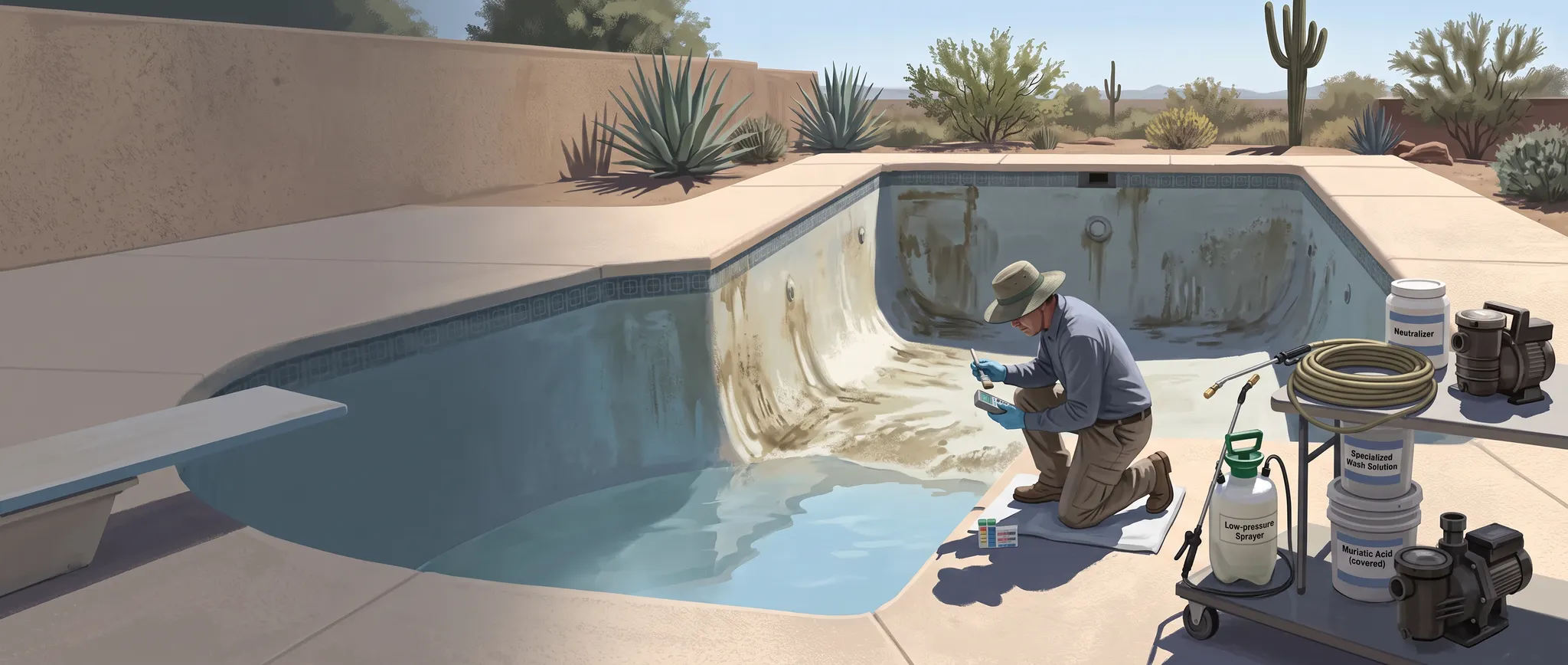
What caused the stain?
Organic debris, algae, mineral scale, metals, and grime can leave different kinds of discoloration.

Tucson pool care
Our technicians will determine how long a stain has been on the pool and, depending on the age and integrity of the pool’s surface, recommend an acid or chlorine wash.
Acid and chlorine wash service in Tucson
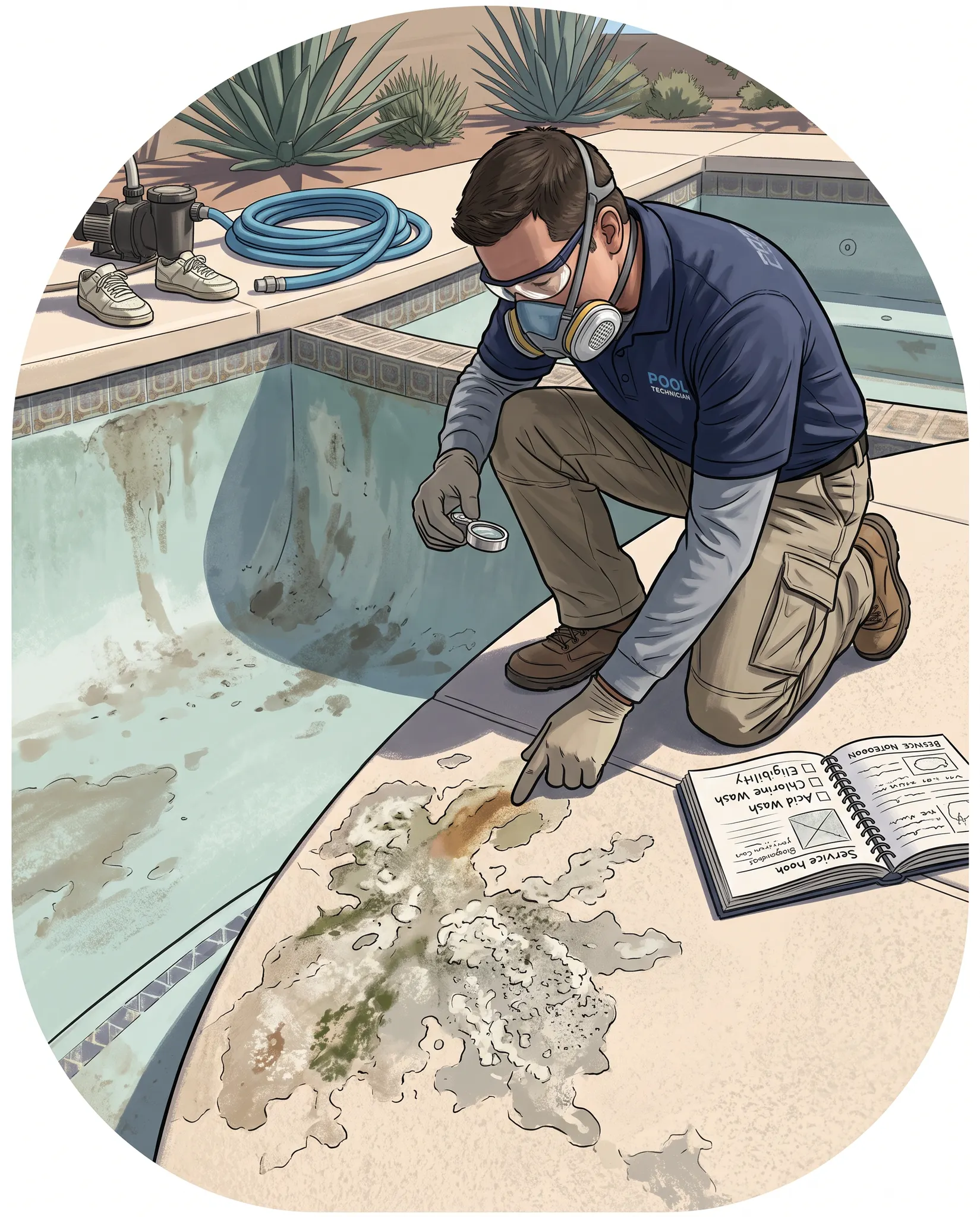
Pool surfaces can collect stains from dirt and grime, calcium, metals, and algae blooms. Those marks do not always disappear through routine cleaning or water balancing.
The age of the stain and the integrity of the pool surface matter. A technician should evaluate both before recommending an acid wash, chlorine wash, or another treatment.
Organic debris, algae, mineral scale, metals, and grime can leave different kinds of discoloration.
Age and surface integrity affect whether an aggressive treatment is appropriate.
Not every pool is a candidate for an acid or chlorine wash, so inspection must come first.
Pool stains fall into four broad families. The infographic below keeps them distinct, because one treatment does not fit every stain.
Environmental buildup and embedded dirt can discolor a surface beyond what routine brushing removes.
Mineral scale can leave pale, rough, or persistent deposits on pool surfaces and waterlines.
Metals in the water can contribute to staining that behaves differently from organic discoloration.
Algae can leave visible staining even after the water condition itself has been addressed.
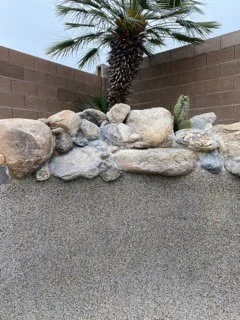
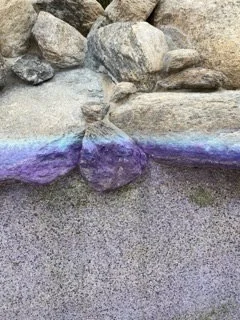
Verified project photography
Drag the line to compare the same project before and after service.
Make the next decision with context
Because acid and chlorine washes affect the pool surface, Tucson Pool & Spa should first confirm the stain history, surface age, and condition. Eligibility—not urgency—drives the next step.
Ask about this serviceA clear next step
Tell us what you are seeing and how to reach you. We’ll help determine the right next step without turning the page into a wall of fields.